
From Storytelling to Experience Design: Why Living the Story Matters

I’ll be heading to London soon to speak at the first-ever London Experience Week—a global gathering of experience economy pioneers hosted by the World Experience Organization.
Why am I so excited?
Because I won’t just be speaking—I’ll be designing an experience that challenges the limits of traditional storytelling.
Yes, storytelling has limits.
Most organizations are stuck in a storytelling trap.
They believe storytelling ends with telling.
But the most powerful stories aren’t told.
They’re lived.
The Problem with Traditional Storytelling
Storytelling is ancient. It’s how we’ve passed down knowledge, sparked action, and built communities. But somewhere along the way, most people and brands tarted thinking storytelling was just about telling a better story.
They polish their narratives, hire TED-caliber speakers, and launch viral campaigns. And while those efforts can be compelling, they often fall flat. Why?
Because these organizations mistake storytelling as the end goal, not the starting point.
They optimize for likes, views, and reach but rarely ask:
Did our story resonate?
Did it change behavior?
Did it create lasting meaning?
A well-told story engages the mind.
But a well-lived story? That transforms hearts.
As an experience designer and longtime TEDx producer, I’ve seen the difference. Most messages are forgotten. But moments designed, lived, felt, …they stick.
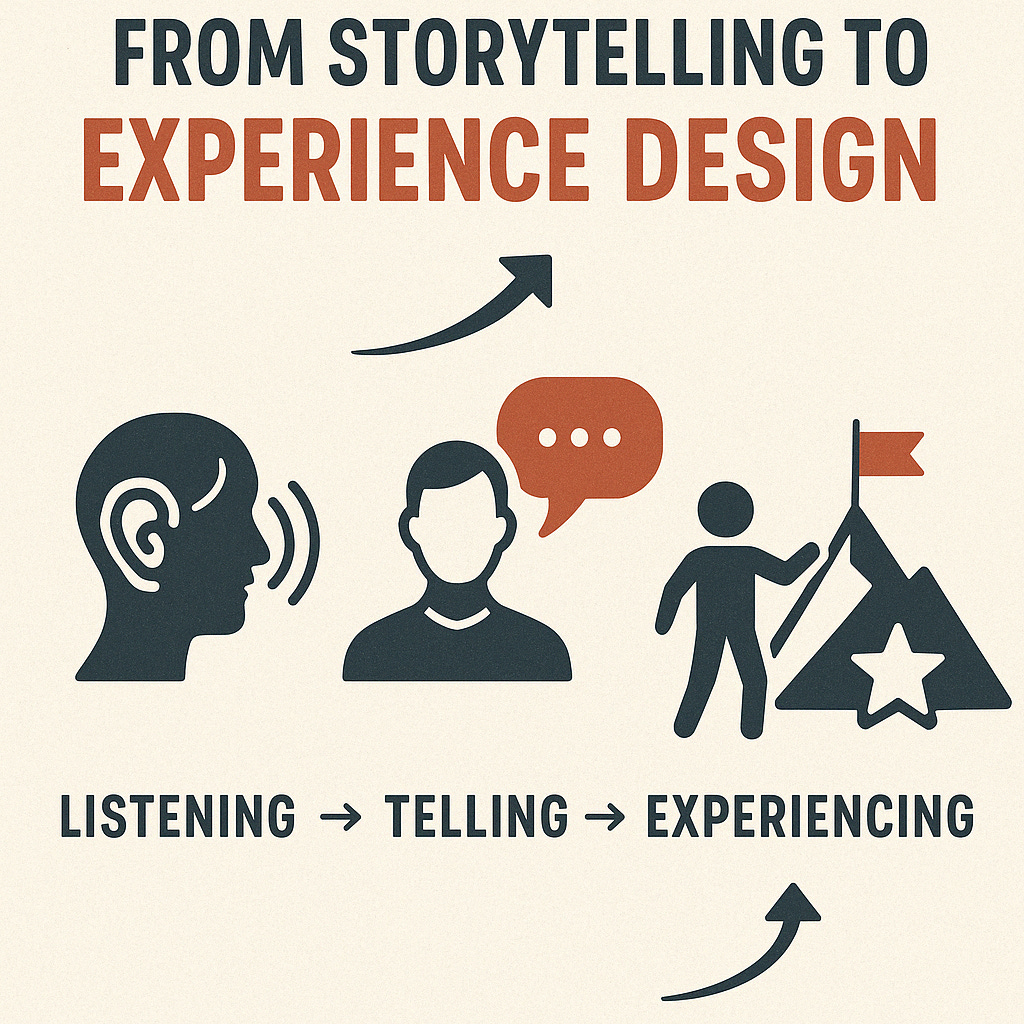
The Three Realms of Storytelling
Through my work, I’ve come to see that storytelling doesn’t live in a single space , it unfolds across three distinct realms.
Realm I: Listening - The Foundation of Narrative Intelligence
This is where the story begins: not with words, but with awareness. Listening builds empathy. It tunes your senses to what resonates.
How often do we skip this part and go straight into telling?
What stories have you recently felt but didn’t share?
Realm II: Telling - The Expression of Meaning
This is where most people stop. Telling is important,but it’s still just you, directing the narrative. The audience may listen… or they may just observe.
Are you delivering a message, or inviting a connection?
Are you leaving space for the audience to see themselves in the story?
Realm III: Experiencing - The Co-Creation of Meaning
This is where transformation happens. The audience doesn’t just hear the story, they live it. They walk inside it. They shape it themselves.
When have you created a moment people could step into?
What would your brand look like if your audience could feel it, not just hear it?
Most brands never make it to this third realm. But this is where the fire is.
The Storytelling Trap
Most companies still treat storytelling as the whole game. They drop millions on slick ads, influencer partnerships, or cinematic keynote speeches. They dazzle with projection mapping and theatrical effects. What do they miss? People remember the spectacle. They don’t remember the message.
They recall the emotion… but not what to do with it.
Nonprofits fall into this trap—delivering a touching personal story that brings tears, but quickly fades by the coffee break. The trap is everywhere: how many car ads promise adventure, until you go to the dealership? Or that amazing looking burger in the ad, until you see the soggy mess.
They’re mistaking the spark for the fire.
Experience Design: Where Story Becomes Transformation
Experience design is the evolution of storytelling. It’s where you stop presenting a message and start crafting a moment—a multisensory, emotional, participatory journey.
At TEDxNaperville, we didn’t just put speakers on stage. We designed the day as an emotional arc, using lighting, scent, interactive moments, and intentional pacing to move people through an experience they’d never forget.
This progression matters:
Storytelling is input.
Experience design is output.
And meaning is made by the particip
ant, not the brand.
The Power of Living the Story
When people live the story, they become a part of it. It’s psychological. Immersive experiences activate deeper emotional and cognitive engagement.
A customer who touches the product, smells the space, or plays a role is far more likely to advocate for your brand than one who just watches a slick viral video.
Think Nike’s pop-up challenges. Think immersive theater like Sleep No More. Think of an onboarding journey designed like a hero’s quest, where the new employee feels like the protagonist.
This is experience design in action.
My own framework, The Swarm Effect®, builds on this principle creating shared, immersive goals that align teams and ignite cultures.
Final Thought: Go Beyond Telling. Design Your Story
Here’s the real challenge:
Are you still focused on telling better stories?
Or are you ready to break past the self-imposed limits—and start designing stories people can step into… and walk out of changed?
Because the most powerful brands and leaders don’t just speak.
They craft experiences that let others feel, shape, and live the story for themselves. After London, I’ll be sharing what was created—and what was learned.
Because that’s where real transformation begins.
Ready to make your audience live your story? Lets start with a conversation.